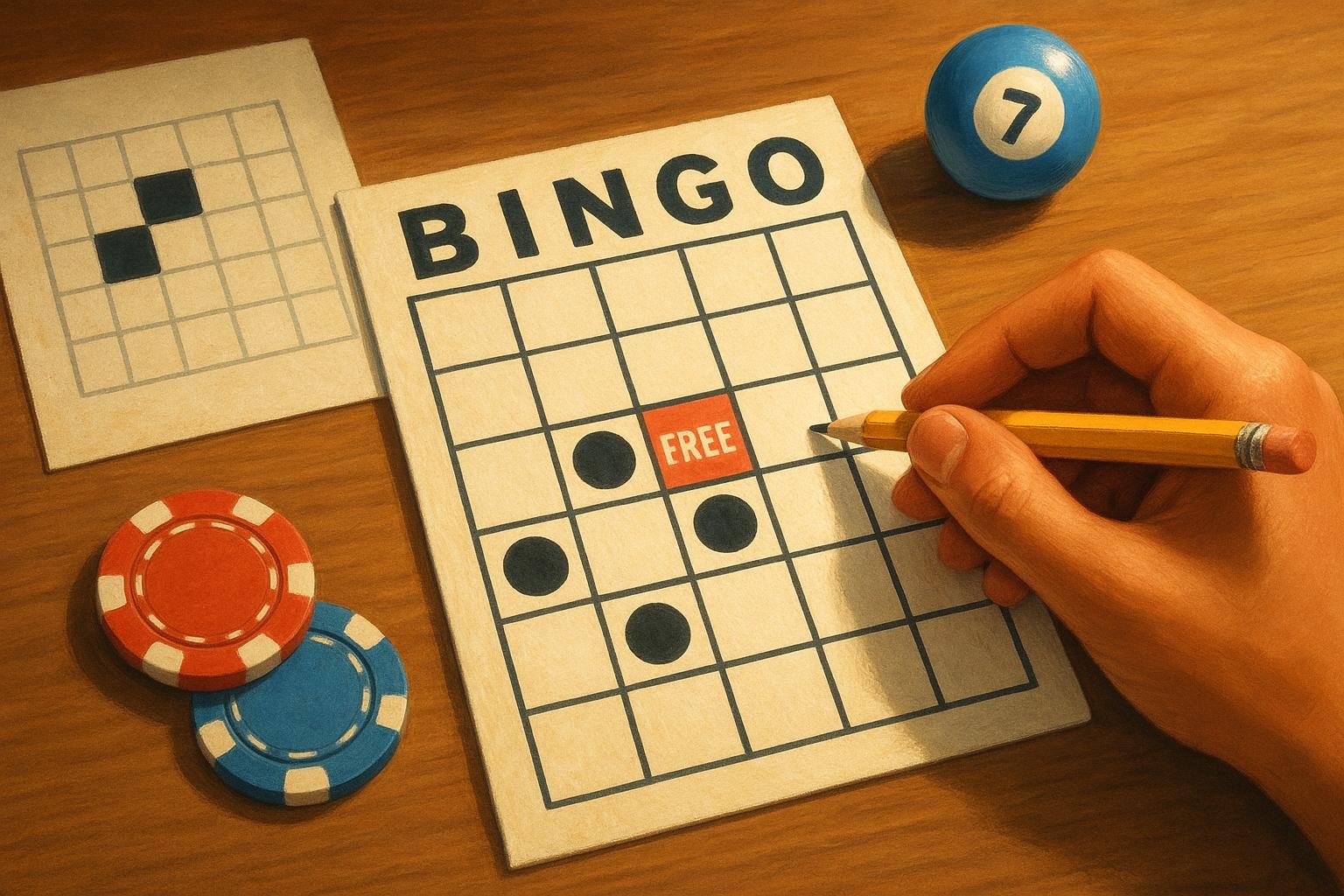
A bingo card can look straightforward until a game calls for a particular shape rather than a full line. Before play begins, check the pattern, the rules for the free space and how a win must be claimed. Those small details can help you follow the game without mistaking a near-match for a completed one.
Start with the pattern, not the numbers
Look for a pattern diagram or a written description in the game rules. A line game might require five marked spaces across, down or diagonally, while another round could use a specific shape or require every playable space to be marked. The exact pattern depends on the game.
For example, if the target is a diagonal from the top-left corner to the bottom-right, the relevant spaces form a single path across the card. A mark on the opposite diagonal does not count unless the rules allow either diagonal. Similarly, a completed row may not be enough if the round asks for four corners.
Check how the free space works
Many bingo cards have a free center space, but its treatment can depend on the game’s rules. Check whether it counts as already marked when a pattern crosses it, and whether the target shape includes that square at all. Do not assume that a free space changes every pattern in the same way.
A useful quick check is to trace the target shape on the card before the first call. If it includes the center, note how the game treats that space. If it does not, keep your attention on the required numbered positions.
Confirm whether the pattern has to be exact
Some games ask for a defined arrangement; others may accept a pattern as part of a larger set of marked squares. The rules should say whether extra marked spaces are allowed. This matters for shapes with several positions: a card that contains all the required spaces may still need to meet the game’s specific claim conditions.
- Line: Identify whether horizontal, vertical, diagonal or any of those directions qualify.
- Corners: Check which corners are required and whether the card’s layout matches the diagram.
- Shape: Compare the arrangement square by square; a similar-looking shape may not be the stated one.
- Full card: Confirm which spaces count and whether the free space is treated differently.
Use a simple pre-game routine
- Read the round’s pattern description before the calls begin.
- Find each required position on your card and mentally trace the shape.
- Check the free-space rule and any stated exceptions.
- Find out how to claim a win and whether the game pauses for verification.
- During play, check completed positions against the target rather than relying on a quick glance.
When several cards are in play, the pattern check becomes more important because attention is split. Choosing a number of cards you can monitor comfortably is one way to keep the process manageable; this guide to choosing how many bingo cards to play covers pace, screen size and session limits.
What to do when a card looks like a winner
Pause long enough to compare every required square with the pattern and the calls recorded by the game. If the game has a claim button or another stated procedure, follow it promptly. Do not rely on the shape alone: a space may appear marked on screen without being a valid called number, or the round may use a different pattern than the previous one.
If something is unclear, consult the game’s rules or help panel rather than guessing. Bingo formats can differ, just as other number-based games have their own rules; the site’s overview of how Keno works offers a separate example of why it helps to understand a game’s specific marking and draw process.
Keep the session comfortable
Learning the pattern is about following the rules, not improving the underlying chance of a result. Set a time and spending limit before play, and treat the game as entertainment. If you are new to casino games more broadly, a beginner’s guide to casino play can help you think through basic session habits.
Practical takeaway: Before each bingo round, identify the target shape, confirm how the free space counts and check the claim procedure. That brief routine makes it easier to tell a genuine completed pattern from one that only looks close.